Colorado Springs Housing Market Update: October 2026
Colorado Springs Home Sales Are Slow...
The Colorado Springs housing market has slowly shifted in buyers' favor over the past few years. In September, we had more active listings than in any September since 2011. We also had fewer homes sold than in any September since 2013.
Home prices peaked in 2024 and have been slowly falling since. If inventory growth continues, prices will keep dropping.
The Colorado Springs Real Estate Market Update
*Updated on October 9th, 2026
Average Home Price:
$545,660
The Average Home Price in September 2025 was $565,356.
(That's a 4% decrease ↓ from last year.)
Median Home Price:
$479,000
The Median Home Price in September 2025 was $479,450.
(That's a 0.1% decrease ↓ from last year.)
SUMMARY: The median home price reflects the middle sales price of homes sold in El Paso/Teller Counties based on September 2026 sales data. The average sales price is calculated by summing the sale prices of all properties in El Paso/Teller Counties over the same timeframe and dividing by the number of properties sold, providing a broad overview of the market's pricing landscape. To understand the typical price range of homes in Colorado Springs, the median home price is often more indicative because it is less affected by price outliers.
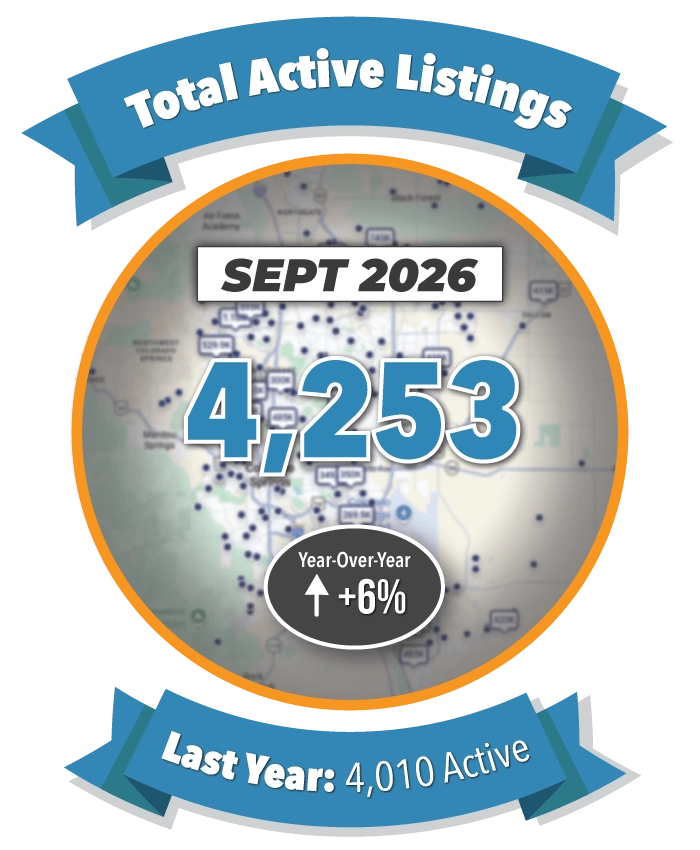
In September 2026, the number of houses for sale stayed the same as last year, at 4,253. That's 5 months of similar year-over-year numbers. The market seems to be balancing out, with sellers reluctant to list right now and buyers harder to find.
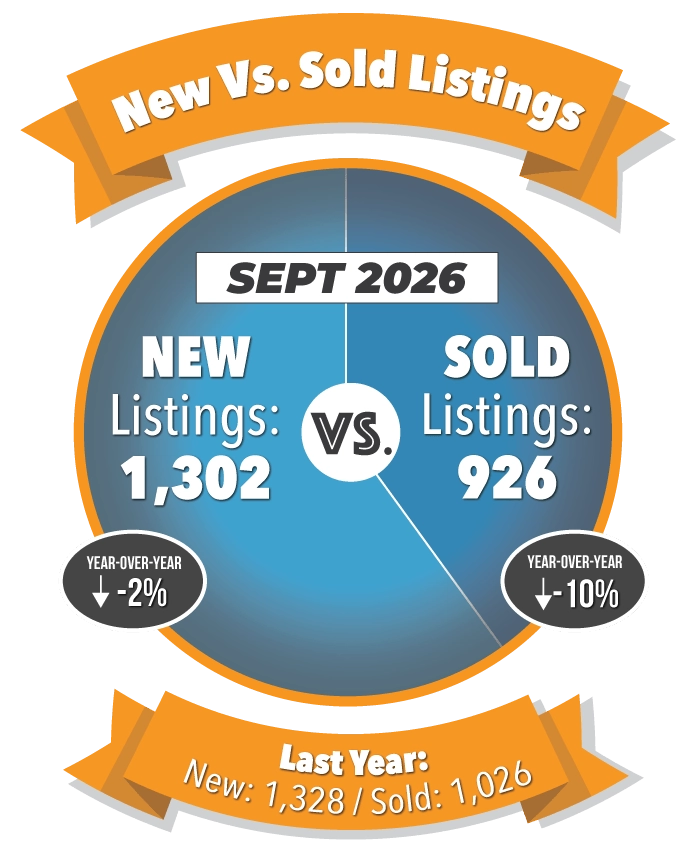
The MLS added 1,302 new listings last month, down 2% from last year. Additionally, 996 homes sold last month, down 10% from September 2025. Listings and home sales are currently slow.
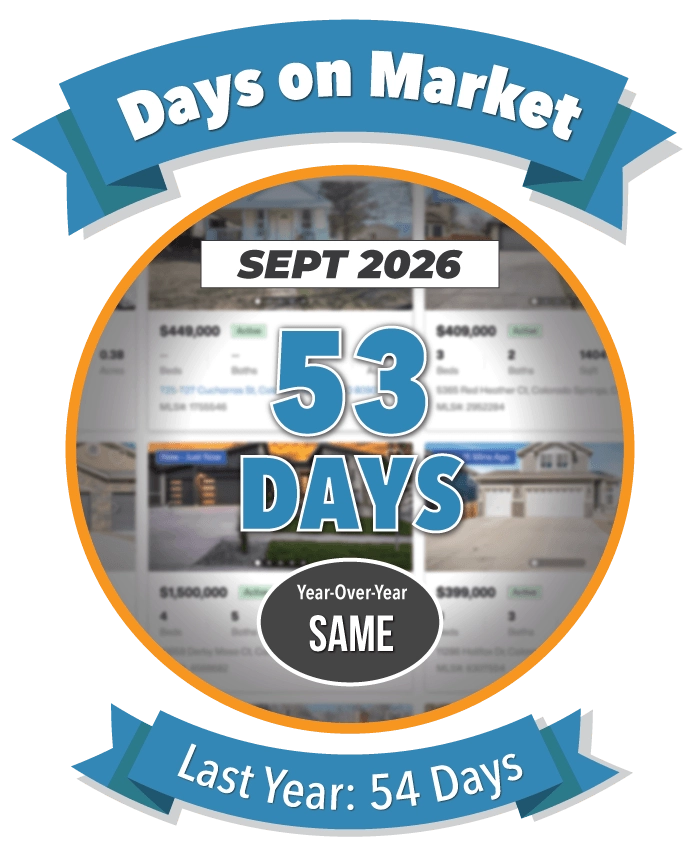
The term 'days on the market' refers to how long a home stays listed before going under contract. In September 2026, the average time to sell was 53 days. This is similar to last year, suggesting homes are still taking a little longer to sell.
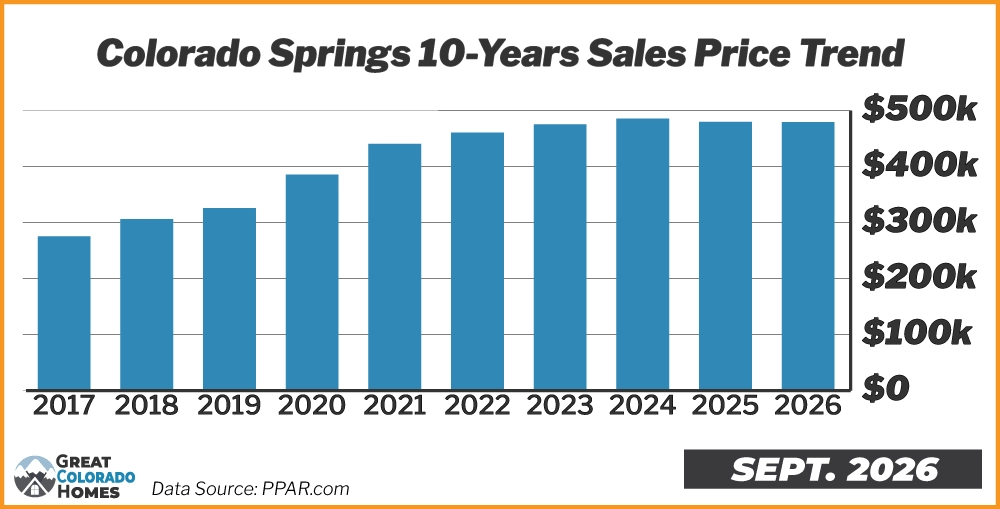
Home prices in Colorado Springs have been flat for 4 years.
Home prices have not moved much over the past four years, even as inflation has pushed many other costs higher. In Colorado Springs, our current inventory is at a 4.6-month supply. A six-month supply usually indicates a balanced market, but our market feels softer than that suggests. We have more homes available than we did in the last decade, but inventory will likely need to rise further before prices fall significantly across the market.
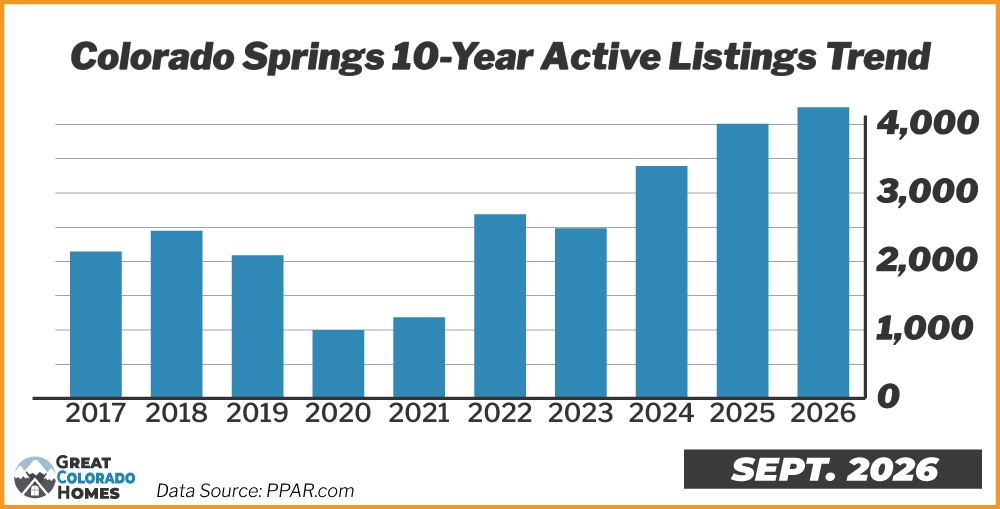
Inventory growth may finally be slowing down in Colorado Springs.
The chart shows that in September, inventory stopped steadily rising for the fifth consecutive month, which could signal that our local market is stabilizing rather than continuing to stockpile more homes for sale. September is usually one of the busiest months of the year for home sales, but this year, listing activity seems the same as last year. That makes this shift worth watching closely over the coming months.
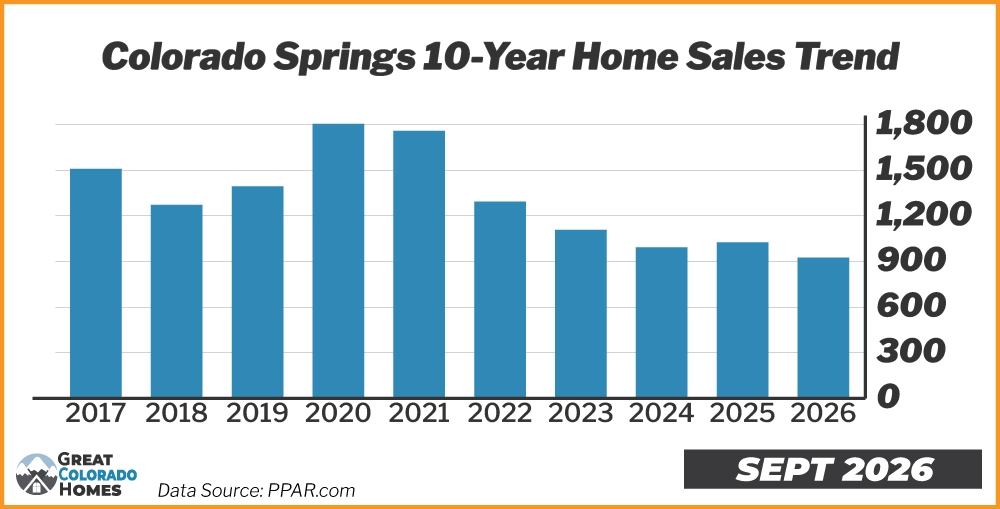
The Colorado Springs housing market is still moving slowly.
September was another slower month for home sales compared to the stronger years shown in the chart. Affordability is still the biggest issue. Home prices have stayed high while wages and borrowing costs have made it harder for many buyers to move forward. If this trend continues through the Fall, sellers may feel more pressure to drop their prices.
Sellers may need more patience and stronger pricing strategies to attract serious buyers right now. An experienced listing agent can help price and prepare a home so it stands out. This shift could help bring the market closer to balance, especially for first-time buyers and move-up buyers who have been waiting for more options. Both buyers and sellers should watch the fall market closely, as the next few months may reveal a lot about where Colorado Springs is headed.
Is Colorado Springs in a buyer's or seller's market right now?
 Last month, we sold just 996 homes, down 1% from last year. At the same time, inventory stopped rising for the fourth straight month. About twice as many homes are on the market now as before COVID. We have been in a soft buyers' market for months because available homes remain relatively high.
For sellers, this means patience matters. Some homes may need price adjustments, stronger presentation, or better positioning to attract buyers. A short pre-listing checklist can make a real difference in how quickly a home moves. Many homeowners still hesitate to sell because they are locked into much lower interest rates than are available today.
Even with the slower market, Colorado Springs continues to attract new residents and long-term investment. We are still seeing commercial development, new neighborhoods, and apartment and new-home construction across the area. The market is changing, but it is not frozen. Buyers have more choices, and sellers still have opportunities when they price and prepare their homes correctly. Many military buyers are considering homes with assumable VA loans to keep their interest rates low.
Over the past year, more homes have hit the market, but the data don't point to a housing crash right now. Median prices have stayed close to last year's numbers, and the market is shifting gradually rather than falling quickly. The bigger story is that buyers now have more negotiating power than they did at the peak of the seller's market. If you do end up in a multiple-offer situation, our guide to getting an offer accepted is still worth reading.
In 2026, home prices in the Pikes Peak region appear likely to remain mostly steady unless inventory rises much faster than demand. Higher interest rates continue to limit what buyers can afford, but supply has not reached the level typically associated with a fully balanced market. That tension is keeping prices from moving much in either direction.
We are also closely watching homeowner behavior. Many owners have strong equity positions, but some are borrowing against it rather than selling. Others are staying put because their current mortgage rates are too low to give up. These decisions affect how much inventory comes on the market throughout the year.
Forecasting the housing market is never simple, especially when interest rates, affordability, and inventory are all moving at once. For now, Colorado Springs looks more like a cooling, rebalancing market, not one crashing. If you are weighing a move to Colorado, our local team can help you read the numbers with the neighborhoods in mind. We will continue tracking the data and reporting what we are seeing in the local market.
Our real estate agents at Great Colorado Homes enjoy discussing the local market with anyone interested in learning about it. If you have any questions, please contact us.
*Based on information from the Pikes Peak REALTOR® Services Corp. ("RSC"), for the period September 1, 2026, through September 30, 2026. RSC does not guarantee or is in any way responsible for its accuracy. Data maintained by RSC may not reflect all real estate activity in the market.