$1,385,000
Active
3
Beds
4
Baths
4090
Sqft
2.08
Acres
11790 Huckleberry Dr, Franktown, CO 80116
MLS#: 3330299


Interactive Map Coming Soon.
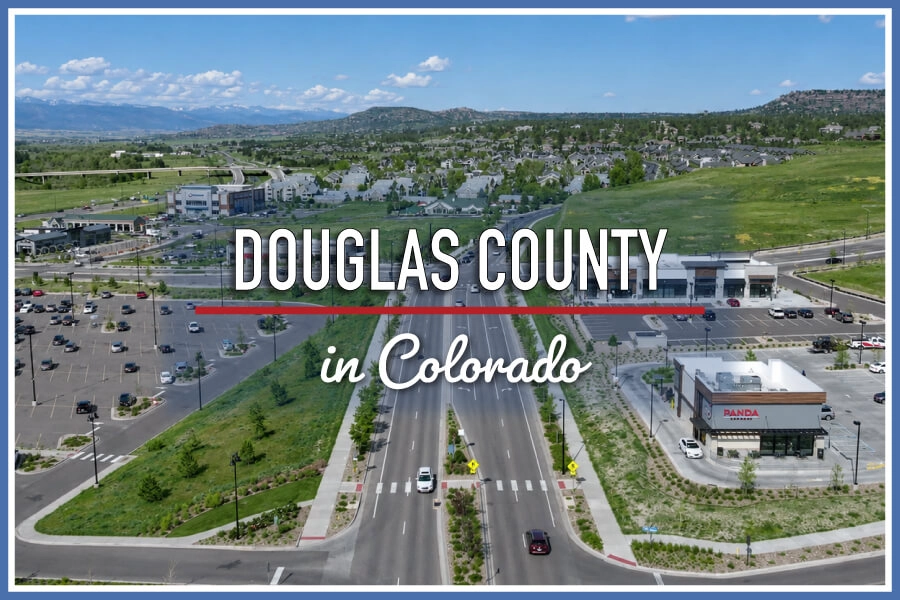
Douglas County stretches from the southern suburbs of Denver down toward the El Paso County line, covering communities that read very differently from one another. Highlands Ranch brings master-planned density and polished amenities. Castle Rock is positioned about midway between Denver and Colorado Springs. Parker has a more open east-side character. Larkspur and Sedalia on the western edge lean rural. The El Paso County line marks the southern boundary. Most buyers who come to this county already have a commute corridor in mind, because where you land on the I-25 spine shapes almost every other variable in the search.
The listing feed above pulls active inventory across all of Douglas County. Filter by city or community to narrow the results to your target area. The county covers 842 square miles, so a single search at the county level returns a wide range of property types, price points, and daily-life contexts.
When I work with buyers who are searching this county, the first real question is almost always which direction the commute runs. Most buyers are measuring distance toward the Denver Tech Center, downtown Denver, or Colorado Springs. That one variable usually narrows the community list quickly.
Douglas County has some of the newest large-scale master-planned development in the Denver metro, but it also has pockets of older resale inventory that buyers sometimes overlook. Highlands Ranch homes built in the 1980s and 1990s often have different mechanical profiles than the newer Castle Rock communities built after 2010. In a county where list prices can look similar between an older Highlands Ranch home and a newer Castle Rock build, the roof age, HVAC system, and HOA or metro district fees can shift the true monthly cost noticeably.
Attached homes and townhomes appear throughout the county but are concentrated in Highlands Ranch, Lone Tree, and parts of Parker. True acreage properties start showing up around Larkspur, Sedalia, Castle Rock's eastern fringe, and Franktown. For buyers who want land without the rural infrastructure questions that come with far-eastern El Paso County, the Franktown and Perry Park areas of Douglas County offer a middle option.
Newer communities in Castle Rock, Sterling Ranch, and parts of Parker were built with metro district financing, a structure where infrastructure costs get repaid through additional mill levies on property owners over time. The difference between a home in a heavy metro district and one in an established community with minimal district obligations can translate to hundreds of dollars a year on comparable list prices. I bring this up early when buyers are comparing a new-construction Castle Rock home with a resale property in an older section of Highlands Ranch or Parker, because the monthly payment math changes once the full mill levy picture is in.
Highlands Ranch runs on a different model. HRCA debt from earlier development phases is largely retired in many neighborhoods, so the carrying-cost question there is mostly the annual assessment rather than ongoing mill levy debt. Pull the specific district disclosures for any property you are comparing seriously, and look at the most recent tax certificate rather than the listing's estimated taxes.
Most of Douglas County falls within Douglas County School District RE-1, which covers Highlands Ranch, Castle Rock, Parker, Lone Tree, and Castle Pines. A small section near the northern edge of the county, primarily around Highlands Ranch ZIP 80124 and nearby Littleton addresses, may fall within Littleton Public Schools depending on exact address. It is worth confirming the district directly before planning around a specific school, because the RE-1 and LPS line runs through certain subdivisions, not along obvious street boundaries.
RE-1 serves multiple high school attendance zones across the county, and school assignment in larger communities like Highlands Ranch and Parker depends on your specific address, not just the city name. Review current RE-1 attendance boundaries early in the search if a particular campus matters to your household.
I-25 is the county's central artery and the route that most Douglas County buyers are measuring against Denver or Colorado Springs. Rush-hour conditions on I-25 through Castle Rock and the C-470 interchange are worth test-driving before committing to a specific part of the county. Highlands Ranch buyers have C-470 access east to I-25 and west toward Lakewood. Parker buyers rely on Parker Road (SH-83), E-470, and I-25 through Lone Tree. Castle Rock is the most road-dependent. The town opted out of RTD in 2005, so the search here works best when you have a clear picture of your weekly driving pattern.
E-470 provides a useful bypass around the south Denver suburbs and direct access to Denver International Airport from both Parker and Lone Tree without entering city traffic. Buyers who travel frequently often find this one of the more practical advantages of staying on the east side of Douglas County.
The county-level search is a starting point, but the differences between a 1995 Highlands Ranch resale with no metro district and a 2020 Castle Rock new build carrying additional mill levies are details that show up in the disclosures, not the listing photos. We help buyers compare carrying costs, review district documents, and understand what each community's HOA or metro district actually covers before they get deep into the transaction. Call us at 719-357-7366 or use the listing feed above to start browsing.
If you are still in the early stages of planning a move, the moving to Colorado guide on this site covers what the broader Colorado Front Range search looks like from the start.